Building safer, smarter and more connected

Public Safety

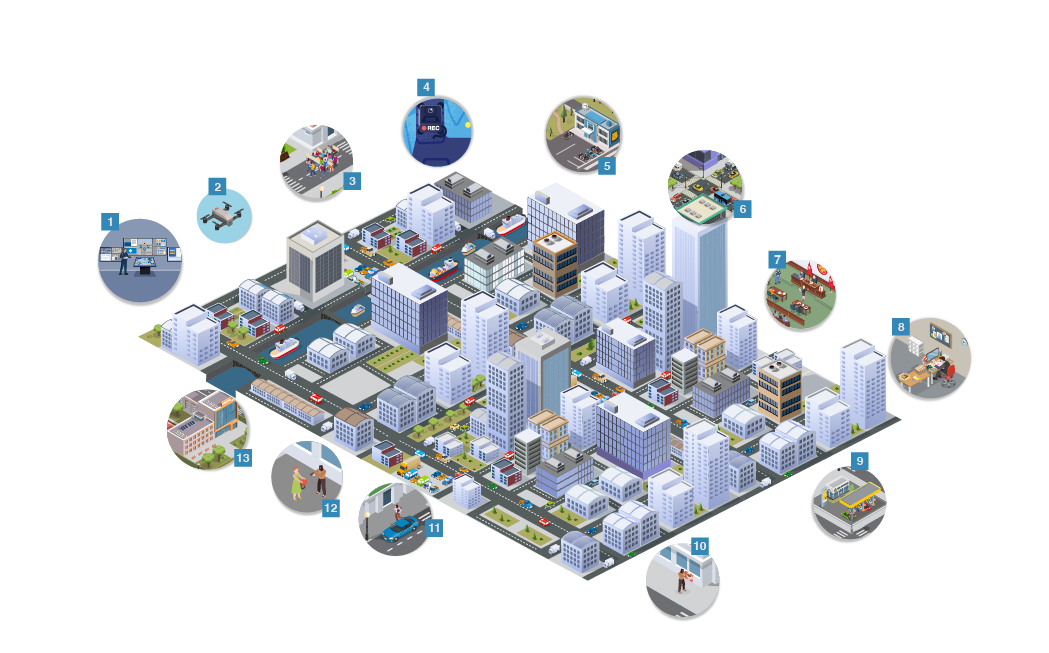
As public safety challenges grow and emergency response becomes more complex, authorities need a clearer, more coordinated view of incidents across urban environments. Disconnected security systems can slow response times and limit situational awareness. A unified approach to video surveillance, access control, analytics and operational data helps public safety organizations detect incidents earlier, coordinate response teams more effectively and manage critical events with greater confidence.

Public safety organizations need coordinated incident response, real-time situational awareness and reliable security across public spaces, emergency services, government facilities and critical infrastructure. SSDNET integrates security and monitoring technologies to help public safety teams detect incidents, coordinate responses and protect people and assets.

Unified Security Operations: Centralized video surveillance, access control, alarm monitoring and incident management, connecting compatible security systems through a unified operational interface.

Intelligent Video Surveillance: Fixed, panoramic and thermal cameras, combined with AI-based video analytics, to monitor public spaces, transport hubs, government facilities and high-risk locations.

Vehicle & License Plate Recognition: Automated license plate recognition and vehicle access monitoring for controlled areas, public facilities and relevant law-enforcement workflows, subject to legal authorization.

Public-Space Monitoring: Video analytics for detecting selected events, analyzing crowd movement and identifying potential congestion in suitable environments.

Perimeter & Intrusion Detection: Intrusion detection, perimeter monitoring and integration with compatible alarm systems to protect public buildings and sensitive sites.

Emergency Communications: Public announcement, voice warning, fire detection and alarm integration to support emergency notification and evacuation.

Centralized Incident Coordination: Integration of compatible security systems and operational data to improve situational awareness and help response teams coordinate actions.

Video Walls & Command Centers: Centralized operator displays and monitoring environments for security control rooms and emergency coordination centers.

Security Risk Assessment: Site-specific threat and vulnerability assessments, security planning and integration design.

Network Infrastructure: Secure wired and wireless networks, firewall management, network segmentation and resilient connectivity for public safety facilities.

Cybersecurity: Security assessments, identity and access protection, and centralized security monitoring for public safety IT environments.

Personal Data Governance: GDPR/KVKK-oriented personal data inventory and privacy management where public safety organizations process personal data, subject to applicable legal requirements.